
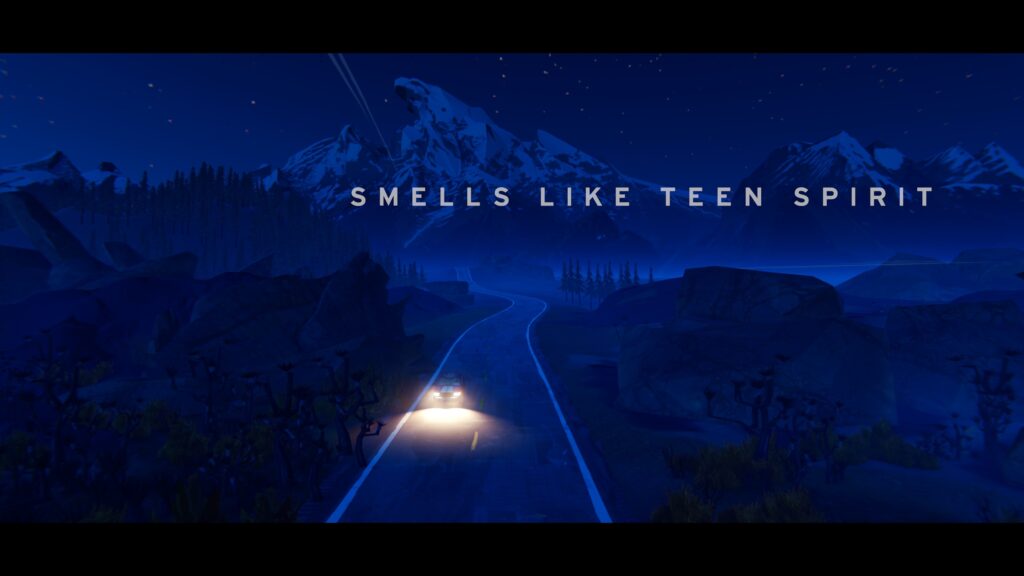
A road trip is one of those ideas that immediately evokes a certain feeling. Endless roads stretching towards the horizon. Beautiful scenery. Random encounters with interesting people. The freedom to decide where to go next. Looking at Road 96, it is easy to assume that this is exactly the kind of experience it wants to offer. Its colorful comic-book visuals, quirky humor and excellent 90s-inspired soundtrack all point in that direction. I was wrong and that expectation lasted for about an hour.
Road 96 tells the story of teenagers attempting to flee Petria, a fictional authoritarian state, by making their way to the border. Every escape attempt is assembled from a procedurally arranged sequence of encounters, making each journey unique. On paper, it sounds like a road trip with political overtones. In practice, I found myself playing something entirely different. Rather than making me feel adventurous, Road 96 gradually replaced the excitement of travelling with a growing sense of vulnerability, uncertainty and fear. The further I progressed towards freedom, the less free I actually felt. And the more I played, the more I suspected that this contradiction wasn’t an accident — it might be the point.
The Trip Turns
The beginning does little to challenge the expectation of an adventurous and even easygoing road trip. My first ride was with another teenager who dropped me off at a trailer park. There I could pet a cat, play the trombone and decide whether to spend the night under the stars or rent a trailer. Money was scarce, so I settled for the campfire before hitching another ride the following morning. A truck driver transporting what he insisted was “important cargo” needed help staying awake, which involved mixing together a rather questionable energy drink. It was absurd, light-hearted and accompanied by a soundtrack that perfectly captured the carefree spirit of a summer road trip. At that point I felt confident that I knew what kind of game I was playing.
The next stop changed that impression completely. In a small village I unexpectedly became involved in a robbery after stumbling across two criminals breaking into a taxi company. Before I had really processed what was happening, I had become their accomplice. As payment they handed me the keys to the stolen taxi. Ironically, the first real sense of independence the game offered me lasted only a few minutes. Driving through winding mountain roads in heavy rain while another upbeat song played on the radio, a stranger suddenly appeared in the middle of the road. I stopped. He climbed into the passenger seat.
Moments later he was pointing a gun at me, a “rage meter” appearing beside his portrait and turning what had been an ordinary conversation into a life-or-death negotiation. He had a very short temper, and the meter rose or fell depending on how he reacted to my answers; if it filled completely, my journey would presumably end with a bullet. I managed to talk my way out of the situation, but only by surrendering the taxi. This was the moment the game’s emotional strategy revealed itself — not because of what happened, but because of what it made me feel.
What struck me afterwards was not simply that the sequence was tense — plenty of games create tense moments. What fascinated me was how quickly my own body responded before I had even thought about what was happening: my shoulders tensed, my heart rate increased, and I caught myself carefully weighing every dialogue option, not because I wanted to shape the conversation but because I simply wanted it to end. I was no longer thinking about exploration or adventure; I was trying to survive. Before I had consciously decided whether I liked the encounter, my body had already answered the question. The carefree road trip had quietly become a struggle to survive, and only afterwards did I realize what Road 96 had already achieved: it had made me feel vulnerable before I’d started analyzing why.
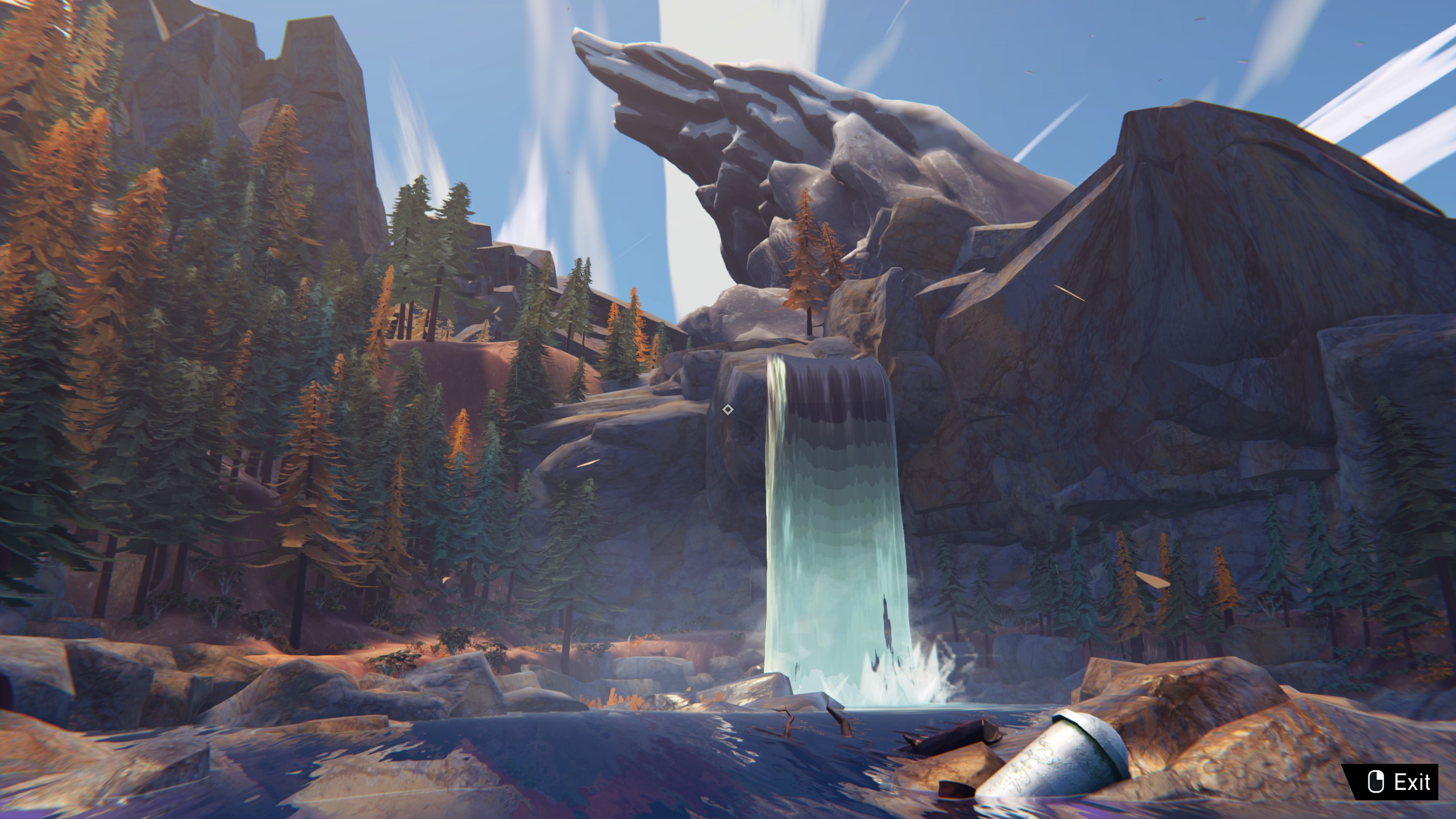
That feeling never really disappeared. Shortly afterwards, the road leads past a beautiful waterfall accompanied once again by cheerful music. Under different circumstances it would have been the perfect road-trip moment, inviting the player to pause and simply enjoy the scenery. Yet I found myself unable to relax. The landscape had not changed, but my relationship to it had. Every new stretch of road now carried the possibility that the next stranger might rob me, manipulate me or simply end my journey altogether. The game continued to present beautiful spaces, but they no longer felt comforting. They had become emotionally charged with uncertainty.
The final approach to the border reinforced that impression. There were several possible ways across: the official checkpoint, hiding inside a truck or attempting to cross through the woods. I chose the latter. After being robbed, meeting another teenager attempting the same escape and eventually being spotted by border patrol, I reached the border wall. There the game confronted me with one final decision: should I help the other teenager climb first, or should I let them help me? I anticipated what would happen should he go first, so I chose the selfish option. I climbed over the wall while they were caught behind me. The game never reveals their fate, but it hardly needs to. Looking back, that choice still doesn’t sit right with me.
For the teenager I had guided across Petria, the journey was over — but there were no end credits. Instead, another teenager appeared, and the game simply began again with the same escape attempt. This cycle repeats until an election, months later, where enough accumulated choices might eventually topple the dictator. That was the moment I stopped playing.
Powerlessness as Design, Not Just as Flaw
At first I assumed that Road 96 simply was not my kind of game. The more I reflected on it afterwards, however, the more I wondered whether my discomfort had actually been the point. Most video games encourage a fantasy of mastery: given enough skill, perseverance, or patience, the player will eventually overcome every obstacle. Road 96 rarely offers that reassurance. Its protagonists are ordinary teenagers who depend on strangers, luck, and circumstances beyond their control. Food is scarce, money even scarcer, and every decision carries risks that cannot always be anticipated. Even the procedural structure contributes to that uncertainty; rather than making each journey feel endlessly replayable, it often made me feel as though my fate depended on forces I could influence only to a limited degree. What unsettled me was the feeling that I had almost no meaningful leverage over what happened to my character — my choices often felt less like decisions I could reason my way through and more like inputs into a random number generator.
This raises an interesting question about how games create emotional experiences. There is a difference between understanding that a character is powerless and feeling powerless yourself. Road 96 does not merely tell the player that escaping an authoritarian country is dangerous. Through its mechanics it invites the player to inhabit that uncertainty. The lack of control is not only part of the story; it becomes part of the experience of playing. The game repeatedly places the player in situations where success depends as much on circumstance as on judgment, producing an emotional state that mirrors the precarious existence of the teenagers it portrays.
The survival mechanics reinforce that impression. Your health slowly drains as you walk, skip meals, or go without sleep, while edible food is surprisingly hard to find — more often than not, the choice is between eating something spoiled and risking losing even more health, or skipping the meal altogether and hoping you make it to the next stop. Collapse from exhaustion and you’re caught. Luck matters here as much as any decision you make. Rather than creating the familiar fantasy of mastery, Road 96 repeatedly confronts the player with dependence, vulnerability, and uncertainty.
A game about crossing a border without papers under an authoritarian regime arguably shouldn’t make me feel competent. It shouldn’t reassure me that careful planning and quick reflexes are enough to overcome every obstacle. Perhaps the frustration I felt wasn’t working against the game’s themes at all. Perhaps it was the mechanism through which those themes were communicated. This lingering feeling of uncertainty colored every encounter afterwards. Even moments that should have felt peaceful no longer did. Once the game had taught me to expect danger, I carried that expectation with me through the rest of the journey. In that sense, the game doesn’t simply tell a story about powerlessness — it gradually teaches the player what that powerlessness feels like. Whether that is enjoyable is another question entirely.
Not the Escape I Wanted
For me, the answer was no. I did not stop because the game failed to communicate its themes. If anything, it succeeded remarkably well. It simply produced an emotional experience I was not looking for at that particular moment. Sometimes we turn to games for confrontation, and sometimes we turn to them for escape. At a time when the real world already felt uncertain enough, I found little comfort in a game that so convincingly transformed the promise of freedom into the experience of vulnerability.
Perhaps what fascinates me most about Road 96 is this: it promises the emotional language of a road trip — open roads, colorful landscapes, an uplifting soundtrack — and then systematically replaces it with anxiety, dependence, and uncertainty. That gap between what the game sounds and looks like and what it actually makes you feel is a kind of affective dissonance, and by the time I reached the border, it had done its work. I wasn’t thinking about adventure anymore. I was thinking about survival.
It’s also why the game amounts to more than a road trip gone wrong. It’s a reminder that games do more than tell stories or present mechanics — they shape the emotional space we inhabit while playing them. Road 96 didn’t simply ask me to guide a teenager across a border; for a few hours, it made freedom itself feel fragile, conditional, and never entirely within my control. I may not have enjoyed that feeling, but I have to admire how effectively the game created it — and I’m still not sure whether that makes it a better game, or simply one that asked more of me than I wanted to give.
That wasn’t the road trip I expected and wanted, but it may well have been the one the game intended all along: the road never stops looking like freedom. It simply stops feeling like freedom.